Landscaping Advertising in Glendale, AZ: A 2026 Buying Guide
The ad that brings the most calls may also waste the most crew time. For a Glendale landscaping company, landscaping advertising Glendale should be judged by qualified estimates and booked work, not inquiry volume alone. Out-of-area requests, jobs your team can’t deliver profitably, and leads that go unanswered all turn ad spend into operational noise.
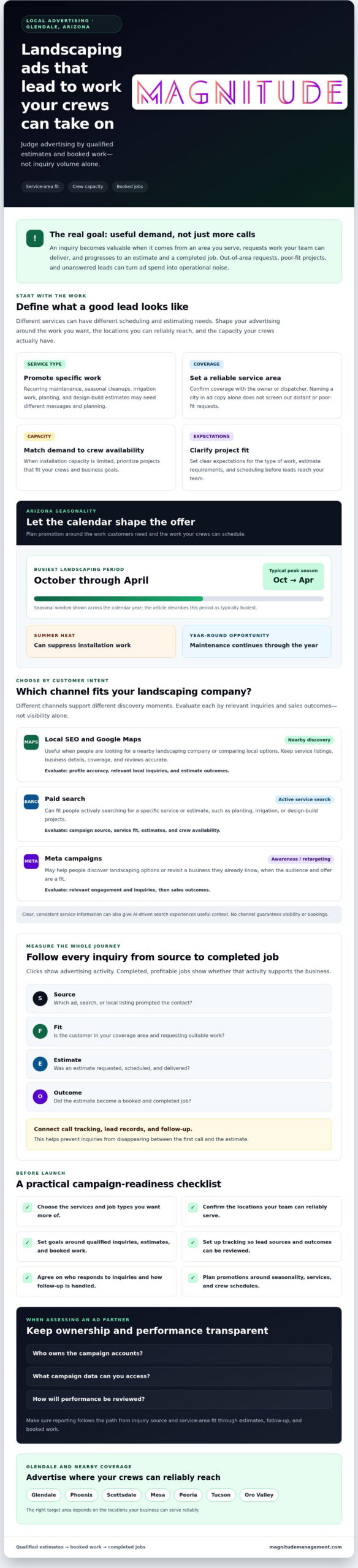
Seasonality makes planning important. Arizona’s busiest landscaping period typically runs from October through April, while summer heat can suppress installation work even as maintenance continues year-round. Your advertising should reflect the services you want to sell and the work your crews can schedule. Businesses serving customers in Glendale, Phoenix, Scottsdale, Mesa, Peoria, Tucson, or Oro Valley should also make sure their targeting reflects the locations they can reliably reach.
This guide compares local search visibility, including Google Maps, with paid advertising so you can decide where each approach fits. It also explains how to qualify requests by service area and job type, then track inquiries through estimates, follow-up, and booked work. The goal isn’t simply to generate more leads. It’s to build a measurable advertising system that brings in work your team can take on profitably.
Key Takeaways
- Evaluate landscaping advertising in Glendale by whether it brings in service-area-fit inquiries your crews can handle, not just more visibility or clicks.
- Compare Google Business Profile and Maps, paid search, and Meta based on the landscaping services and customer demand each can support.
- Track each inquiry from its source through service fit, estimate, booking, and completed job to see where leads become revenue.
- Before launching a campaign, define your target services, coverage area, goals, tracking, and lead follow-up process.
- When assessing an ad partner, ask who owns campaign accounts, what data you can access, and how performance will be reviewed.
What should landscaping advertising in Glendale accomplish?
Landscaping advertising in Glendale should generate inquiries from people inside your actual service area who want work your crews can deliver profitably. Measure more than visibility: track calls and forms, qualified estimates, booked jobs, and completed work. This path helps you distinguish attention from business results and plan marketing around your services, response capacity, and schedule.
Which Glendale landscaping customers and jobs should ads target?
Start by deciding which work you want more of. Recurring maintenance and one-time projects such as seasonal cleanups, irrigation work, planting, or design-build estimates can have different scheduling and estimating needs. Avoid using the same message for every service if crew availability, ideal project size, or delivery requirements differ.
Define the neighborhoods and nearby areas your teams can reliably reach, then confirm the coverage with the owner or dispatcher. Repeating a city name in ad copy won’t filter out distant or poor-fit inquiries on its own. Set clear expectations for project fit, estimate requirements, and scheduling. When installation capacity is limited, prioritize jobs that match your crews and business goals.
Why clicks alone cannot show whether landscaping ads work
A click means someone visited a page or took another early online action. It doesn’t tell you whether that person is in your service area, needs a service you offer, requested an estimate, or hired you. Search ads, social ads, and other forms of online advertising can create visibility, but visibility is only the first step.
Track each inquiry through a practical sequence:
- Source: Which ad, search, or local listing prompted the contact?
- Fit: Is the customer in your coverage area and requesting suitable work?
- Estimate: Was an estimate requested, scheduled, and delivered?
- Outcome: Did the estimate become a booked and completed job?
Clicks measure advertising activity; completed, profitable jobs show whether that activity is supporting the business. Connect call tracking, lead records, and follow-up so inquiries don’t disappear between the first call and the estimate. If your local presence is unclear, a local search visibility audit can help identify where Glendale customers may be finding or missing your business.
Which landscaping advertising channels fit a Glendale company?
Choose channels based on the customer’s stage, the services you want to promote, and your crew’s capacity. Local SEO and Google Business Profile optimization support organic discovery. Paid search can reach people actively looking for specific work. Meta campaigns may build awareness or support retargeting. Clear, consistent business information can also help people and AI search tools understand your services, though no channel guarantees visibility or bookings.
| Channel | Customer intent | Useful fit | What to evaluate |
|---|---|---|---|
| Local SEO and Google Maps | Looking for a nearby landscaping company or checking local options. | Accurate service listings, recurring maintenance, and seasonal services. | Profile accuracy, relevant local inquiries, and estimate outcomes. |
| Paid search | Actively searching for a specific service or estimate. | Clearly defined work such as planting, irrigation, or design-build projects. | Campaign source, service fit, estimates, and crew availability. |
| Meta campaigns | Discovering landscaping options or revisiting a business they know. | Awareness or retargeting, if the audience and offer fit. | Relevant engagement and inquiries, followed by sales outcomes. |
When local SEO and Google Maps visibility make sense
Local visibility helps present a clear, consistent picture of your company: what services you provide, where you work, and how customers can contact you. That clarity matters beyond traditional search. Well-organized service information gives AI-driven search experiences more useful context to interpret, but inclusion or placement isn’t guaranteed. Keep your business details, service descriptions, coverage, and reviews accurate. The National Association of Landscape Professionals is also a resource for understanding the landscaping trade. A local search visibility audit can help identify gaps in your local presence.
When Google Ads or Meta Ads may support demand
Paid search can complement organic visibility when you want to promote a specific service to people already seeking it. Meta campaigns serve a different role: they may introduce your work to an audience or reconnect with people who have engaged with your business. Align either approach with seasonal demand and estimate capacity. Review current platform options before launch, then judge performance by relevant customer actions, not visibility alone.
For landscaping advertising in Glendale, the channel mix should follow your service priorities and operating capacity. Magnitude coordinates local SEO, Google Business Profile optimization, and paid advertising for landscaping companies. Explore local visibility and advertising support if you want help evaluating the right mix.
How do you judge landscaping advertising by lead quality and job economics?
Judge landscaping advertising by the work it produces, not by clicks or raw inquiry counts. For landscaping advertising in Glendale, connect each campaign to valid inquiries, service-area fit, estimates issued, jobs booked, and completed work. Compare those outcomes with the services you want to grow and the crews available to deliver them. This gives you a clearer basis for adjusting spend or follow-up.
Which landscaping lead metrics deserve attention?
Track calls and forms by campaign and requested service when reliable tracking is available. A call about maintenance isn’t equivalent to an irrigation estimate, and neither is useful if the customer is outside your coverage area. Keep a consistent record of whether each inquiry qualifies and what happened next.
- Inquiry: Record the source, contact type, and requested service.
- Qualification: Note whether the location and work fit your service area and offerings.
- Sales outcome: Track estimates issued, estimate attendance, bookings, and completed jobs.
Review this information alongside campaign activity. Call tracking can help connect phone inquiries to their source, while a sales pipeline or CRM can show whether leads progressed to estimates and jobs. If reporting stops at clicks, ask for information that follows the customer through those stages.
How do seasonality and crew capacity change the evaluation?
Landscaping demand and scheduling aren’t static. Seasonal cleanups, planting windows, and irrigation requests may arrive at different times, while design-build work can require estimates and more planning. Assess each lead in context: does the requested timeframe match your schedule, and can a crew reach the location without disrupting planned work?
Ask how the advertising plan will respond when estimate requests outpace available crews. You may need to adjust campaign focus, timing, or service-area targeting rather than pursue every inquiry. A lead that can’t be served in the requested area or timeframe isn’t automatically valuable.
Hypothetical example: Imagine two campaigns generate inquiries. One brings several requests for work outside your coverage or beyond your current schedule. The other generates fewer requests, but more match your services, attend estimates, and become completed jobs. Without assuming conversion rates or that every job has the same value, the second campaign may be the stronger fit. Check actual job outcomes and costs before deciding.
Booked-job tracking gives lead counts the context they need: it shows whether inquiries are turning into work your crews can complete. If paid campaign reporting doesn’t connect spend with lead quality and outcomes, Magnitude’s ad waste audit can help examine where tracking or campaign performance needs closer review.
How should you prepare a Glendale landscaping advertising campaign?
Prepare by confirming the target is Glendale, Arizona, then documenting the services, coverage area, and appointment capacity your campaign should reflect. Before promotion begins, decide who handles new inquiries and how the team records estimate progress. This groundwork keeps campaign promises aligned with the work your crews can actually schedule.
Build the campaign around service area and job type
Choose the services you’re prepared to take on, and distinguish recurring maintenance from larger projects that need an estimate or site visit. Check the practical service radius with the people who plan routes and dispatch crews. If a location is difficult to serve consistently, don’t include it just to make the target area look broader.
Make sure campaign messaging describes the work accurately and explains the next step. A customer requesting a design-build estimate, for example, may need a different inquiry path from someone asking about recurring maintenance.
Set up tracking and follow-up before increasing promotion
Before launching, test whether calls and forms can be recorded and connected to their source when reliable tracking is available. Assign an owner for incoming requests, and establish how the team will update estimate and booking outcomes. Keep attribution in perspective: tracking helps show a likely source, but it may not capture every interaction that influenced a customer.
- Confirm coverage: Document the Glendale-area locations crews can reliably serve.
- Check capacity: Match estimate appointments and project scheduling to current workloads.
- Assign follow-up: Decide who reviews inquiries during your actual office hours and how they’re logged.
- Review the process: Check that records distinguish estimates, bookings, and completed work.
If inquiries arrive faster than your team can respond or schedule estimates, address that operating constraint before increasing promotion. A campaign is better prepared when its targeting, message, and lead-handling process reflect how the landscaping business runs day to day.
Choosing a Landscaping Ad Partner in Glendale
A strong ad partner should make the plan understandable before asking you to trust it. Look for a provider who can explain why each channel fits your business, what work they’ll perform, what you’ll be able to review, and how the plan can adapt as landscaping demand changes. Don’t treat confident promises as proof. Clear responsibilities and transparent access matter more.
Questions to ask before hiring an advertising agency
Use the interview to test how the provider makes decisions, not just how they present a proposal. Ask how they’ll account for different landscaping services, estimate cycles, seasonal demand, and crew limits. Their answers should connect marketing choices to your operating realities.
- Strategy: What informs the choice of channels and campaign priorities for my business?
- Control: Will I retain access to advertising accounts, campaign materials, call data, and reports?
- Reporting: What will you review with me, how often, and how will recommendations be explained?
- Flexibility: How will the plan change if seasonal priorities or crew availability shift?
- Commitments: What specific work will you deliver, and what outcomes can the reporting reasonably show?
Be cautious of guaranteed rankings or lead volume. No provider can control every factor that affects visibility or customer decisions. A credible partner should state what it can commit to, explain the limits of the data, and give you a useful basis for deciding what to adjust.
When Magnitude’s local visibility and advertising support fits
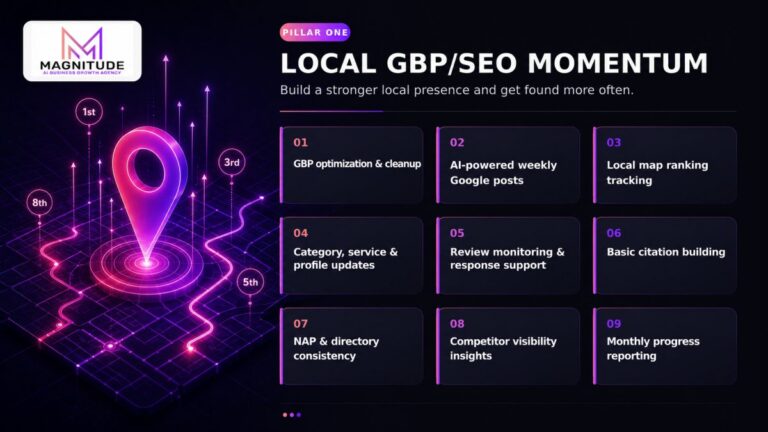
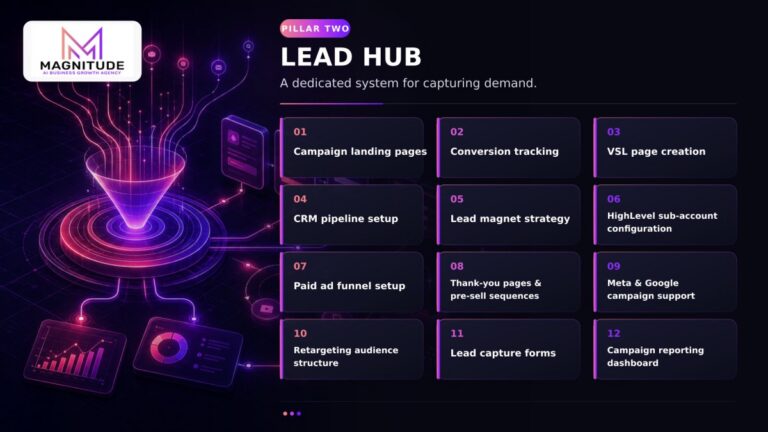
Magnitude works with landscaping companies on local SEO, Google Business Profile optimization, and paid advertising. Its Lead Hub supports landing pages, CRM automation, sales pipelines, call tracking, and campaign analytics. These capabilities can bring local visibility and inquiry management into a coordinated process, with account access and reporting included in the discussion.
Use your evaluation criteria to decide whether a provider’s approach fits your services, service area, and operating capacity. The right choice is one you can understand, assess, and refine as the business changes.
Build a More Accountable Local Advertising Plan
Effective landscaping advertising in Glendale starts with a clear business goal: attract customers you can serve, then understand which inquiries turn into completed work. Choose channels based on your services and crew availability, and judge performance by qualified estimates and booked jobs, not clicks alone.
Local visibility and lead follow-up should work together. Magnitude offers local SEO and Google Business Profile optimization for landscaping companies, along with Lead Hub tools for landing pages, CRM automation, sales pipelines, call tracking, and campaign analytics. Together, these can help you see how inquiries move through your sales process without relying on vague reports or promises of guaranteed results.
Identify what you want to promote, where your crews can work, and how you’ll measure the outcome. Then choose an advertising plan you can track and adjust as demand and capacity change. Discuss local landscaping advertising with Magnitude to take a practical step toward better-informed growth.
Frequently Asked Questions
Which advertising works best for a landscaping company in Glendale?
No single channel works best for every landscaper. Local search visibility can help customers find your business when they’re looking for landscaping services, while paid search can target people seeking a specific service. Meta campaigns may support awareness or retargeting. Choose based on your service mix, coverage, season, and crew availability, then evaluate qualified inquiries, estimates, and booked work before shifting investment.
How can a landscaping company get more local leads in Glendale?
Start by defining the areas you can reliably serve and the jobs you want, such as recurring maintenance, seasonal cleanups, or planting projects. Keep your business details and service information accurate, and give potential customers a clear way to request an estimate. Useful reviews and prompt inquiry handling support the process. Track whether contacts fit your service area and lead to estimates, bookings, and completed work, rather than relying on a promised lead count.
Are Google Ads worth it for landscapers?
Google Ads may be worth testing if you have priority services, a defined service area, room in your crew schedule, and reliable inquiry tracking. Measure relevant calls and estimate requests, not just clicks. A campaign promoting irrigation work, for example, should be judged against inquiries for that service and their sales outcomes. Account for seasonal demand and scheduling constraints, and treat results as something to evaluate, not a guarantee of bookings or profit.
Should landscapers use Google Maps advertising or local SEO?
Local SEO and Google Business Profile optimization support organic visibility in local search and Maps. Paid advertising is a separate way to pursue visibility through eligible campaigns. They serve different functions, so one isn’t automatically a substitute for the other. Check current platform options before planning paid placements. Then compare each source by relevant local inquiries, estimates, and booked work to decide how it fits your landscaping services and crew capacity.
How much should a Glendale landscaping company spend on advertising?
There’s no universal budget that fits every Glendale landscaper. Set a test amount based on the services you want to promote, your service area, season, campaign competition, and capacity to handle additional estimates. Confirm tracking before launch so you can connect spend with qualified inquiries and later job outcomes. Review the evidence before increasing investment, and avoid treating a generic benchmark as a reliable forecast for your own business.
How do I know whether landscaping advertising is generating real jobs?
Record where each call or form came from, whether the request fits your service area and offerings, whether you issued an estimate, and whether the work was booked and completed. Clicks and lead totals show activity, not revenue. Call tracking and a CRM or consistent sales log can connect marketing activity with sales progress. Attribution isn’t always exact, so check how data is collected before drawing conclusions about a campaign’s contribution.
What should I ask a landscaping advertising agency before hiring?
Ask how the agency defines a qualified inquiry, targets your actual service area, and tracks estimates and booked jobs. Confirm who owns the ad accounts and campaign assets, what tracking and reporting access you’ll receive, and how often results will be reviewed. Test their understanding of landscaping seasonality, recurring maintenance, project estimates, and crew limits. Be cautious of guaranteed rankings or lead volume; require a clear description of the work and measurements instead.
Contact Magnitude to discuss local SEO and advertising support for your landscaping business.